
35% ROAS Improvement Year-Over-Year
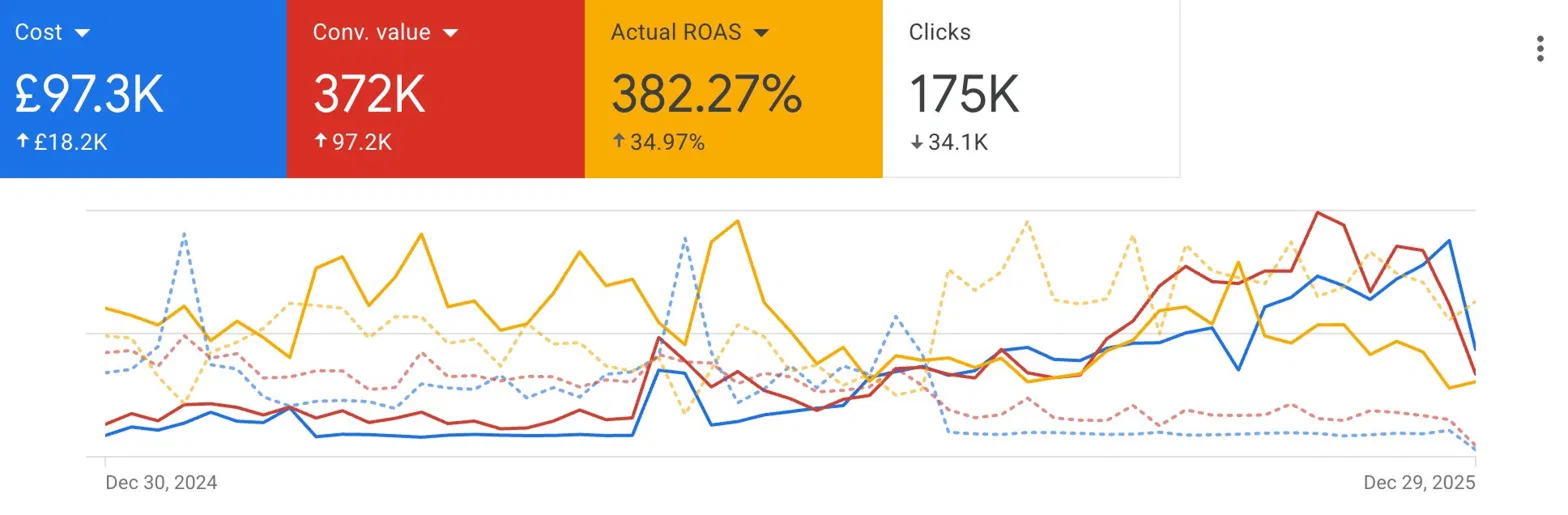
A hair and skincare brand had been on Google Ads for ~18 months when they came in with a problem common to replenishment-category brands: years of valuable buyer data sitting unused while the ad account was treating every customer like a stranger. Twelve months after a rebuild that put existing customer data at the centre of the bidding strategy, the account lifted ROAS from 347% to 382% (a 35-point improvement), while adding £97.2K in incremental revenue against a controlled increase in spend.
- Imported value-based conversion data tied to predicted 12-month LTV (not single-order value), so Smart Bidding optimised for buyers who would replenish, not just buyers who would convert once.
- Uploaded segmented customer match lists from Klaviyo (by replenishment cycle, AOV tier, and product affinity) as audience signals on every PMax asset group, ending the cold-start problem.
- Routed cold acquisition and warm retargeting into completely separate campaigns with separate budgets and separate ROAS targets, so the two jobs stopped competing for the same budget.
- Built a winback Search campaign targeting lapsed buyers searching for category alternatives, with category-led landing pages that re-positioned the brand against where the buyer was looking now.
A Brand Sitting On Years Of Buyer Data, Spending Like It Had None.
Hair and skincare buyers replenish on a predictable cycle, most products run out at 60 to 90 days. The brand had two and a half years of repeat-purchase data inside Klaviyo showing exactly which products lead to second orders, which buyer profiles have the highest 12-month LTV, and which lapsed at month two. None of that data was reaching Google Ads.
Smart Bidding Optimising For The Wrong Outcome
Conversion values being passed to Google were single-order values, the AOV of the first purchase. But in a replenishment category, the first order is a fraction of the customer's true value to the business. Smart Bidding was being told to favour the buyer who placed the £45 first order, even when the data showed that buyer had a 20% chance of reordering, over the buyer who placed a £38 first order with a 60% chance of reordering. The algorithm was optimising for the wrong outcome because it was being shown the wrong data.
Cold Acquisition And Retargeting Sharing One Budget
Performance Max was responsible for both finding new buyers and re-engaging warm audiences inside the same campaign. Because warm audiences convert at a much higher rate, the algorithm naturally favoured them, meaning budget that should have been finding net-new customers was being spent re-engaging buyers the brand was already going to win back through email. The two jobs need different targets and different budgets; they were getting one of each.
Lapsed Buyers Lost To Category Search
The brand's repeat-purchase data showed a clear pattern: buyers who lapsed past day 120 had started searching for category alternatives: "best frizz serum," "scalp treatment for thinning hair," not for the brand by name. Brand search and email were both invisible at this stage because the buyer had stopped thinking about the brand. There was no paid presence on the category queries that lapsed buyers were searching, and no winback motion built into Google at all.
Klaviyo Data Walled Off From The Ad Account
The brand had detailed customer segments inside Klaviyo (high-LTV, replenishment-due, lapsed, upgrade buyers) but none of them had ever been uploaded to Google Ads as customer match audiences. The ad account was running entirely on Google's prospecting layer with no idea what a "good" buyer for this specific brand looked like.
We Connected The Brand's Existing Customer Data To The Bidding Engine.
The brand wasn't missing budget or creative. It was missing the connective tissue between its existing customer data and what Google's algorithm was being asked to do. Every change was about getting the LTV story the brand already knew into the place where Google could act on it.
Value-Based Conversions Tied To Predicted LTV
Imported conversion values into Google Ads tied to predicted 12-month value, not just single-order value, calculated using Klaviyo's repeat-purchase data segmented by first-purchase product. A first-purchase serum buyer (60% repurchase rate) was now passed to Google at a higher conversion value than a first-purchase shampoo buyer (28% repurchase rate), even when first-order AOV was similar. Smart Bidding immediately shifted budget toward the product entry points that produced repeat buyers, exactly what the brand's actual margin profile rewarded.
Value-Based BiddingSegmented Customer Match Audiences As Signals
Uploaded six distinct Klaviyo segments as customer match lists: high-LTV buyers, replenishment-due (60-90 days post-purchase), product-affinity segments (frizz buyers, scalp buyers, etc.), recent buyers, lapsed buyers, and email subscribers who hadn't yet purchased. Applied these as audience signals on each PMax asset group based on which segment best represented the buyer the asset group was meant to find. Cold start was eliminated. PMax had a high-fidelity profile to chase from day one.
Customer MatchSeparated Cold Acquisition From Retargeting
Rebuilt the account with two distinct PMax campaigns: one for cold acquisition with all existing customers excluded via customer match, and one for retargeting with custom audiences of site visitors, cart abandoners, and engaged email subscribers. Each got its own budget and its own ROAS target: the cold campaign at a realistic 2.5x acquisition target, the retargeting campaign at a 6x+ target. The two jobs stopped competing and budget started flowing where it was needed.
Campaign StructureLapsed-Buyer Winback Through Category Search
Built a Search campaign targeting category-level queries the brand's lapsed-buyer data showed they searched: "frizz control serum," "scalp recovery treatment," "thinning hair products," with bespoke landing pages that re-positioned the brand against where the buyer was now looking. Customer match list of lapsed buyers added as a bid modifier, with aggressive bids on buyers Google could identify as the brand's own lapsed customers researching alternatives. Over 12 months, this combination of LTV-informed bidding, segmented audience signals, separated campaign structure, and active winback lifted ROAS from 347% to 382% on £97.2K in incremental revenue.
Winback StrategySee What We've Done For Other Brands.
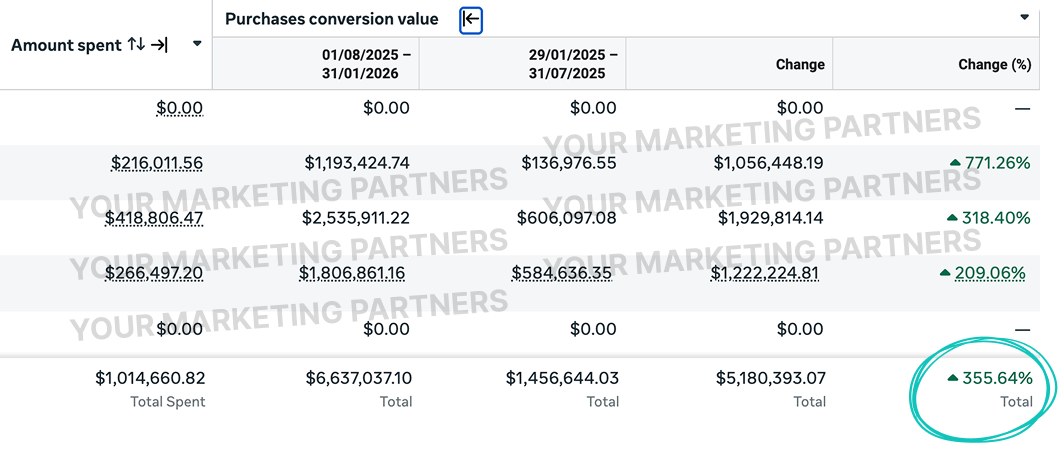
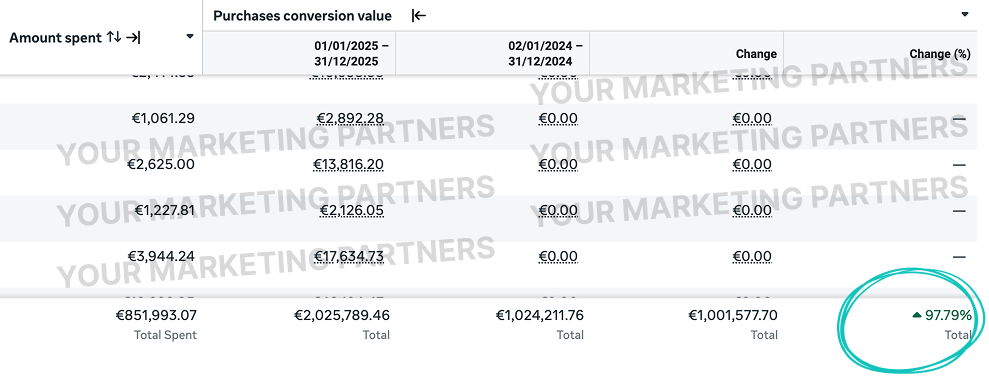
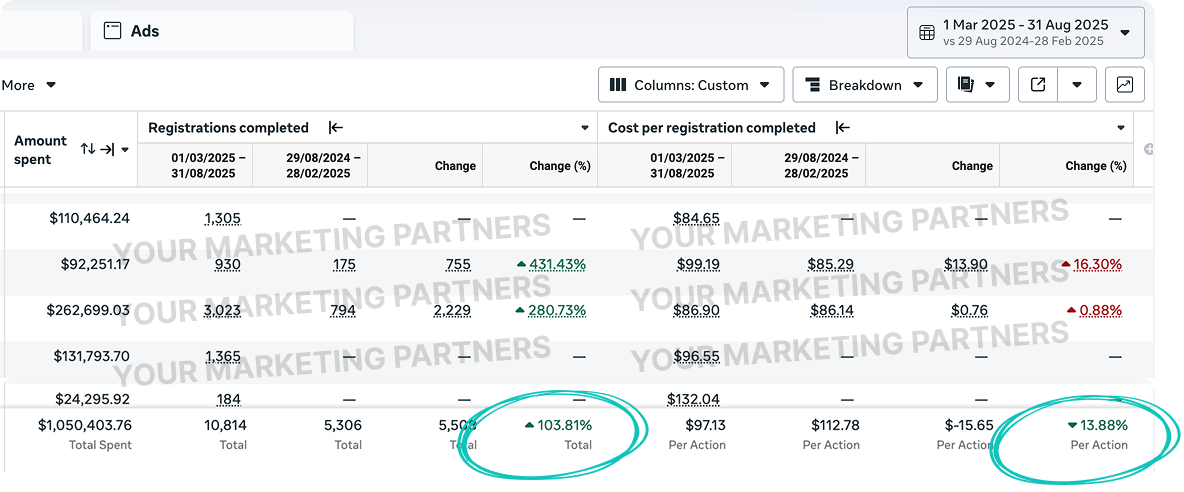
Ready to stop guessing?
Apply for a free Paid Ads Audit + Custom Scaling Plan Powered By Our Predictable Scaling Quadrant™ Method. We'll pinpoint exactly where your budget is leaking and show you a clear path to profitable scale.
Joined by 1,500+ businesses